
|


| |
|
|
|
Change the world one
language at a time –
|
|
Become a Music
Lingua Instructor!
|
|
At Music Lingua we know that every child has the ability to
learn a foreign language. You can help children gain the benefits of
learning another language by becoming a licensed Music Lingua instructor.
|
|
Do you speak French, German or
Spanish? Do you love working with children? Are you looking for a business
opportunity with a low startup cost that you can tailor to your own schedule and
needs?
Music Lingua now offers training for
people like you to become licensed Music Lingua Instructors. Be your own boss,
teach as much or as little as you like, earn some money, and help children get a
start learning a second language in a fun and rewarding business.
|
|
What is a Music Lingua class like?
What
makes Music Lingua unique among foreign language programs for kids?
What are the requirements for becoming a Music Lingua teacher?
What teaching aids will I receive with each unit?
How much or little will I be able to work?
What kind of person becomes a Music Lingua teacher?
What kind of training does Music Lingua provide to teachers?
Do I need prior teaching experience?
Where will I teach my classes?
Who will take my classes?
Is
Music Lingua available in my area?
How do I get more information?
|
|
What is a Music Lingua class like?
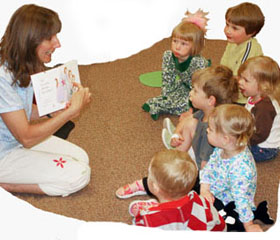
Most Music Lingua classes are attended
by the parent and child, others are drop-off classes, and some are taught in
pre-schools and elementary schools. Parents love attending with their child.
Often they have studied the language themselves, and are happy to have a
refresher course and a continual reminder to speak to their child in the
language. Some are just interested in starting their child young in a foreign
language, and are excited to learn it along with them. (Many of these are
surprised at how much faster their child picks up the language than they
themselves!)
On the first day of a Music Lingua
class each child is given a special student packet, which includes the CD. The
parents are asked to have the child listen to the CD as much as possible at home
and in the car. By the next class the children are already familiar with the
music, perhaps even singing the songs even though they don’t know what the
sounds mean, and the teacher can then focus on comprehension.
The teacher begins by teaching the
children very simple songs in the target language, with the use of many visual
aids. The songs are fun and repetitious and the main vocabulary is repeatedly
reinforced through games, simple commands, art projects and drama. All of the
senses are engaged in learning the language: touch, sound, sight, even sometimes
smell and taste. The goal is to teach the children the foreign language while
having fun singing songs and playing with toys. Without realizing it, the
children will soon signal their comprehension by responding physically to
commands in the target language and eventually responding verbally as well.
Every effort is made to keep a low stress level in the classroom and not require
anyone to speak or act if they aren’t comfortable doing so.
Teachers have a prop or visual aid in
their units’ “Toy Box” for each major vocabulary word or concept they teach,
making it easy and fun for them to convey the meanings of the songs. Most songs
contain language that pertains to the theme, and others contain functional
language and phrases that can be used everywhere. Each unit contains a counting
song, color song, greeting song, and various season-specific songs such as
weather, seasons, or clothing. Classes typically meet once a week for 45
minutes, and last 10-12 weeks.
The importance of parent involvement
cannot be overemphasized. Parents who attend classes with their child can sing
the songs learned in class together with their child. Even parents of drop-off
kids can offer the CD for listening during the week, and help them color and do
the activities in the activity booklet. The beauty of the program is that the
CD goes home with the child, ensuring that the learning continues all week until
the next class.
|
|
What makes
Music Lingua unique among foreign language programs for kids?
Music Lingua is unique in that we
write and record almost all our own music and we teach thematic units. Using
one theme for 10-12 weeks allows us to teach a small but important section of
vocabulary to children, and to reinforce it over and over until it’s well
ingrained. The next theme will contain some similar vocabulary, but will add
the words from the new theme as well. Since we write our own music we can
create precisely the simple lyrics we need, or which utilize the vocabulary we want to
teach. We often use tunes the kids are familiar with, so they feel like they
already “know” the song.
|
|
What
are the requirements for becoming a Music Lingua teacher?
The main requirement is that you speak
French, German or Spanish with a fairly good accent (you need not be
completely fluent). Children will learn by emulating your sounds as well as the
sounds on the music CD, and their first introduction to the language must be
with the best possible accent. If you feel your accent is not quite up to par,
a few sessions with a native tutor may be helpful.
Music Lingua teachers love
working with small children. They have the enthusiasm and energy to lead
children through fun, fast-paced classes, and a willingness to sing. Since
you will usually be singing along with a CD, you do not need to have a perfect
singing voice.
Music lingua teachers are independent
self-starters, interested in a flexible schedule. They are able to promote,
advertise and run their own business.
|
|
What teaching aids will I
receive with each unit?

Each thematic unit comes with the teaching
manual, music CD, complete lesson plans, and scores of high-quality props for
use in the classes. These props are carefully chosen to integrate with the
lessons and songs in the unit, engaging the child with the Total Physical
Response methodology. Just as important, they are FUN!
Shown here is a sample picture of the props
that come with the Life on the Ocean unit - far too many to fit in the photo! |
|
How
much or little will I be able to work?
One of the advantages of being a Music
Lingua teacher is the flexibility it affords. As owner of your own business you
are free to teach as much or as little as you like, and on the days of your own
choosing. You’re the boss!
|
|
What kind of person becomes a Music Lingua teacher?
Music Lingua was originally created by
bi-lingual moms who wanted to teach a second language to their children but
needed reminders to speak to them in that language. It’s ideal for moms or
dads who would like a flexible part-time job in order to be home more with their
child.
Pre-school teachers and employees make
great Music Lingua teachers. Parents are becoming more discerning in their
pre-school choices, and schools with a good quality language program are much
more desirable. We offer a unique, thematic curriculum for pre-schools, along
with all teaching materials and take-home CD packets for each child to continue
their learning at home.
Students just finishing a foreign
language degree and looking for work can increase their employability by
becoming a Music Lingua teacher. Music Lingua is a great place to begin
teaching a foreign language, as we train you and provide the materials you need
to get on your feet as a teacher. It can be an end in itself, or a
stepping-stone for employment in the school systems. If employment in the
local schools is not available, students can keep working in the language field
by teaching Music Lingua classes, and developing skills they can use in
classrooms everywhere.
|
|
What
kind of training does Music Lingua provide to teachers?
All teachers attend an initial 2-day
training session where they will learn general Music Lingua methodology and
specific presentation techniques for their first thematic unit. They will
learn how to best use the CDs to present the vocabulary in each song, how to use
the teaching materials, tips on re-directing distracted students and keeping
order in the classroom. There will be plenty of hands-on practice with the
actual music and props. At the end of the training we want you to feel
confident and prepared to go out and teach your own classes.
|
|
Do I need prior teaching experience?
Although a formal background in
education is great, it is certainly not mandatory. The Music Lingua training
you receive, in conjunction with the teaching materials and training manuals,
will give you the skills and confidence to begin teaching your first classes
right away.
|
|
Where
will I teach my classes?
This depends on factors such as the
facilities available in your town and on how much you’d like to work. Museums,
libraries, churches, and art or dance studios will often rent space for a few
hours each week. If you want to work full time you may need to rent a studio
of your own. When teaching at daycares and schools you will usually teach at
their facility.
|
|
Who will take my classes?
More and more parents are becoming
aware of the benefits children receive from learning a second language. In
addition to offering a fun, effective way to start children learning a foreign
language, Music Lingua classes incorporate music, art and other activities into
the class time, creating a multi-faceted program that is attractive to parents
who care about their children’s future.
A surprising number of native foreign
language speakers take Music Lingua classes with their English-speaking
children. They have found that their children take no interest in learning
their parent’s native tongue until they are in a fun, nurturing environment
where other children are learning it too.
Daycares and pre-schools offer many
opportunities for teaching Music Lingua. A pre-school that offers a quality
foreign language program like Music Lingua has a huge competitive edge over
other pre-schools.
Families who home-school are another
source of students, as it is difficult for a parent to acquire enough foreign
language skills to effectively teach their own children.
Elementary schools that cannot afford
a full-time foreign language teacher may wish to hire a licensed Music Lingua
teacher to fulfill their foreign language
needs.
|
|
Is Music
Lingua available in my area?
Currently, we are recruiting
and training teachers in
Montana, Idaho, Wyoming, Colorado, Massachusetts and Oregon, and will soon
expand to other areas of the country. Click here for a list of upcoming
teacher trainings.
|
|
How
do I get more information?
Help spread the gift of language to children -
Become a licensed Music Lingua teacher!
Please click here to request more information about becoming a
licensed Music Lingua teacher.
|
|